
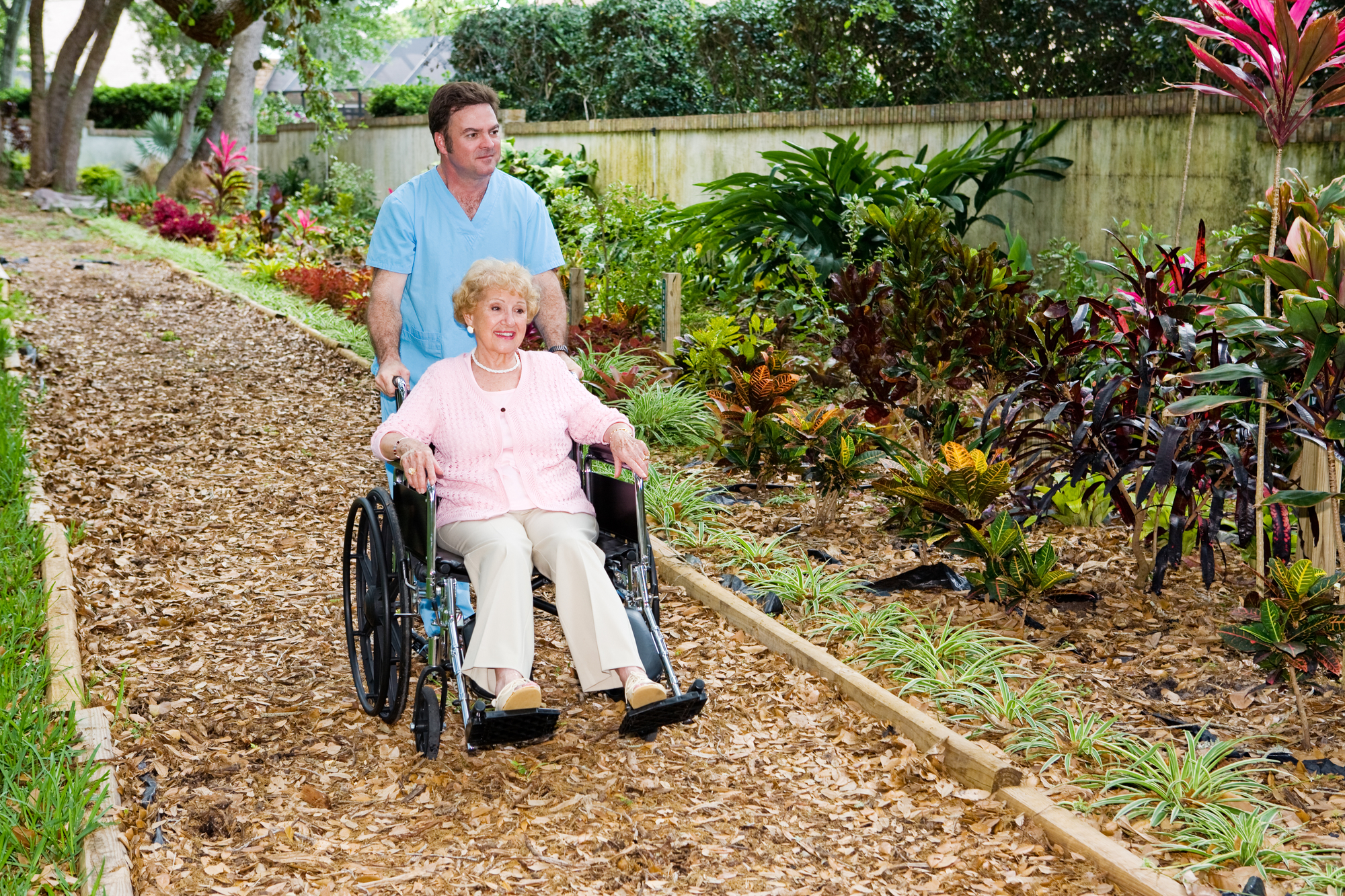
Assisted Living in Florida
What are Assisted Living Facilities?
Assisted living facilities provide full-time living arrangements in the least restrictive and most home-like setting. Facilities can include individual apartments or rooms that a resident has alone or shares with another person. These facilities can also range in size from one resident to several hundred residents.
The basic services include, but are not limited to:
- Housing, nutritional meals, and special diets
- Personal care (help with bathing, dressing, eating, walking, physical transfer)
- Give medications (by a nurse employed at the facility or arranged by contract) or help residents give themselves medications
- Supervise residents
- Arrange for health care services
- Provide or arrange for transportation to health care services
- Health monitoring
- Respite care
- Social and leisure activities
- Mental Health services
A resident can also contract with a licensed home health care provider for nursing and other health care services, as long as the resident does not need 24-hour nursing services and meets any other requirements the facility dictates in order to reside in that assisted living facility.
Click here to search for an assisted living facility
Types of Assisted Living Facility Licenses
There are four types of assisted living licenses. A facility must have a standard assisted living facility license in order to operate in the state of Florida. The other three licenses can be added in order for the facility to provide services designated outside the spectrum of a standard assisted living facility license. Below is a list of services that can be provided with each type of license.
Standard license: A residential facility that provides direct physical assistance with or the supervision of the activities of daily living, medications and other similar services.
Extended Congregate Care (ECC) license: An assisted living facility with an ECC license allows a resident to age in place by providing the basic services of an assisted living facility as well as:
- Limited nursing services and assessments
- Total help with bathing, dressing, grooming and toileting
- Measurement and recording of vital signs and weight
- Dietary management, including special diets, monitoring nutrition, food, and fluid intake
- Supervise residents with dementia and/or cognitive impairments
- Provide or arrange for rehabilitative services
- Provide escort services to medical appointments
- Educational programs to promote health and prevent illness
Limited Nursing Services (LNS) license: An assisted living facility with a LNS license provides the basic services of an assisted living facility as well as nursing services provided by licensed nurses within the scope of their nursing practice. The resident would still need to meet admission and continued residency criteria.
Limited Mental Health (LMH) license: This type of license must be obtained if an assisted living facility serves one or more mental health residents. Services must be provided for the special needs of these residents, along with the basic services of an assisted living facility. A facility with this license must consult with the resident and the resident’s mental health case manager to develop and carry out a community living support plan.
Who is Appropriate to Reside in an Assisted Living Facility?
Residents in ALFs are:
- Eighteen years of age or older
- No longer able to live independently in their own home or apartment
- Need assistance or supervision when eating, walking, grooming or in the bathroom
- Need assistance with medication(s)
- Need routine, simple nursing services but not 24-hour nursing services
- Need routine mental health services but not 24-hour nursing services
Finding/Choosing a Facility
If you or a loved one decides it is time to move into an assisted living facility you may want to visit several facilities and speak to the staff as well as the residents of the facility. This will help you learn about the providers, see where you feel most comfortable and choose the one that best serves your needs.
How do I know if a facility is licensed by the state of Florida?
- Ask to see the current license issued by the Agency for Health Care Administration. It should indicate if it is an assisted living facility, adult family care home, or an adult day care center. It should have an effective date and an expiration date. If the assisted living facility has a special license, as mentioned previously, this will be included on the license. You can also check their license status on Facility Locator or the Assisted Living Facility Comparison Tool at FloridaHealthFinder.gov.
Do all ALFs cost the same?
- No. The fees for each facility are set by the provider and can vary depending on the size of the facility, the amenities provided, the specialty licenses the facility has, location and the services the facility provides to its residents. In addition, a facility may have one fee for certain basic services provided to everyone and a second fee to cover additional services you may want or need.
How can I pay for my ALF residency?
- Payment for assisted living facilities is most often paid with private funds. However, if you are eligible for some government help or you are covered by long-term care insurance, or other types of assistance such as veteran’s benefits, ask the facility or center if these will be accepted.
For example, if you receive Optional State Supplementation (OSS), an assisted living facility must be eligible to accept OSS residents. You can search for facilities with this bed type at FloridaHealthFinder.gov on Facility Locator under the advanced search heading by clicking the orange bubble next to “Bed Type”and selecting optional state supplementation from the drop down menu before clicking “Search”.
Will I need any paperwork to reside in an ALF?
- An ALF will ask a resident to fill out a contract. You can ask for a copy of this paperwork when visiting a facility and take it home with you to read at your leisure. You can also share the paperwork with a friend or family member.
You might want to make an appointment to discuss any questions and concerns you might have and, if possible, take a friend or family member with you, to help you gather information and help you think about your choices. If you ask a question, but do not understand the answer, ask that it be more clearly explained to you.
Before you sign any papers, read them carefully, make sure you understand them and that all of your questions have been answered. When you do sign paperwork, ask for a copy for your own records.
This paperwork lists the services to be provided and the charges. In addition, a contract and a residency agreement include the housing to be provided, optional services and charges, refund and discharge policies, bed hold policy (described later), and other important information.
- A resident with behavioral health issues in an assisted living facility with a limited mental health license will have a community living support plan, as well as cooperative agreement that will be established between the assisted living facility and the mental health provider.
- A resident living in an assisted living facility with an extended congregate care license will have a service plan. These will describe the specific needs and services for the resident as well as directions for meeting those needs.
Can my monthly rate be increased when I reside in an ALF?
- Check the contract to see if the rate is guaranteed, for how long, and under what conditions a contract or residency agreement can be changed or ended. If you are given a verbal guarantee, be sure to get it in writing. A facility is required to give a 30 day written notice of an increase in the monthly rate.
How do you know what activities are offered?
- Ask to see a schedule of activities. Are there a variety of activities you would enjoy? Is there transportation available to go to community activities that you choose? Are there planned trips? Ask these questions before you sign a contract so as to live in the most suitable ALF for you.
Are special diets available in ALFs?
- Depends on the provider. Make sure to ask whether special meals or diets available, if needed before you sign a contract.
Are nursing services provided in ALFs?
- Depends on the facility and what kind of specialty license it holds. Extended Congregate Care and Limited Nursing Service licenses do provide some nursing services. Please note that if you require 24-hour nursing then an assisted living facility is not the appropriate provider for you.
Can I receive health care services from a home health care provider while residing in an ALF?
- While you are a resident in an assisted living facility, you can receive services from a home health care provider, if you need them. You can ask the facility if they will help you arrange for these services. You are able to receive these services as long as you continue to meet the requirements to reside in the facility.
How do I make my medical appointments when residing in an ALF?
- Before signing a contract with an assisted living facility, make sure to find out whether the facility helps make appointments for medical care and/or provides and arranges for transportation to medical appointments? Make sure to inquire whether there is an additional fee or cost for transportation services.
Are special services offered for persons with dementia (like Alzheimer’s disease) in ALFs?
- Before signing a contract with an assisted living facility, ask what special services and activities are available for persons with dementia. You will also want to know if the staff is trained to handle the special needs of residents with dementia and what equipment is utilized to assure that the resident does not wander off.
Do ALFs have a bed hold policy?
- Some do. If an assisted living facility agrees in writing to reserve a bed for a resident who is temporarily admitted to a nursing home, hospital, or some other type of health care facility, the agreement should include a bed hold policy and provisions for ending the agreement.
A resident will be required to continue to pay the monthly fee until the bed hold is ended, as described in the written agreement; or until the resident or their legal representative tells the facility in writing that the resident will not return; or if a medical condition prevents the resident from telling the facility and the resident has no legal representative to speak for them.
What are some other questions I might want to ask a facility before signing a contract?
- Am I able to choose my room (or apartment) or is it assigned to me?
- Will I have my own room or share it with another person?
- Will I have a private bathroom or will I share with others?
- Will I have a full kitchen or a kitchenette? If so, what will it include?
- What are the living room, dining room, and other common areas like?
- Can I bring my pet(s)?
There’s no shortage of things to do in Florida.
From natural wonders to fantastical journeys of imagination, visitors to the Sunshine State will discover a long list of things to do in Florida. There’s no U.S. state quite like Florida, where strawberries grow in winter and beaches beckon year-round.
But, oh, Florida is so much more. Shopping, museum-going, tropical rambles, historic stops and all manner of water sports showcase the state’s versatility from big-city experiences and small-town fun to the planet’s most beautiful landscapes. There are more than 1,000 golf courses, too.
Florida has more than 1,300 miles of coastline, and much of that is made up of sugar-sand beaches. Each region’s beaches have their own personality. The laid-back Keys are often called America’s Caribbean and the azure water surrounding the string of islands certainly backs up that claim. South Florida’s beaches dance to a Latin beat and the Space Coast offers wide, packed sand that is perfect for bike riding or perching to watch surfers and rocket launches. The Gulf Coast beaches are among the nation’s most lauded with unparalleled sunset views. The Northwest beaches are deep and inviting, playing host to visitors from far and wide, all on the hunt for things to do in Florida.
Visitors looking for fun water things to do in Florida’s interior will find it at various lakes and tributaries just as good for fishing as they are for kayaking and canoeing. The natural attributes of Florida attract thrill-seekers as well as those who want to kick back. Some 20 state parks are a draw for campers and hikers to diverse locations around the state.
The state’s natural wonders are complemented by family-friendly fantasy at Florida’s theme parks and attractions. From the Walt Disney World and Universal complexes in Orlando to Busch Gardens in Tampa, and many more zoos and botanical gardens, there is no end of ways to entertain the family (and adults who act like kids) north to south, east to west.
The fun activities and things to do in Florida continue into the night with the pulsating clubs of South Beach, Orlando and Jacksonville and at concert venues around the state. Florida is a major stop on the concert circuit and acts such as Beyonce, Justin Bieber and Bruce Springsteen make the Sunshine State a destination, too.
For many travelers, dining out and sampling authentic local cuisine is high on their to-do list. Florida doesn’t disappoint with its wide array of local seafood, including grouper, shrimp and the legendary stone crab, available from mid-May to mid-October. Even the locals rejoice when the hard-shelled crabs show up on menus in the spring. Key lime pie, Cuban delicacies and even Greek food, a specialty of Tarpon Springs, are just some of the popular food choices. The craft beer movement has exploded in Florida and visitors will find local brew in most cities with names like Crooked Can, Cigar City, Funky Budha, Oyster City, and Veterans United. A brewery tour is a delicious way to cool off on a hot day.